
Homeowners
Applications
Professionals
Applications
Our high-quality sump pumps and backup systems can dependably protect your home and keep you and your family safe and dry.
Learn MorePumps
Systems & Packages
Accessories & Parts
Sewage or grinder pumps move raw sewage and unwanted water away from the home. Our pre-plumbed packages make selecting and installing the right equipment easy.
Learn MorePumps
Systems & Packages
Accessories & Parts
Unwanted water and raw sewage are pumped to an outside basin. Sewage lift station pumps take this wastewater up and away.
Learn MorePumps
Systems & Packages
Accessories & Parts
During storms, excess water can lead to flooding, pollution, and damage. We offer a range of pumps, containers, and controls to manage your stormwater effectively.
Learn MorePumps
Systems & Packages
Accessories & Parts
Effluent lift stations collect and pump the grey water or effluent from commercial facilities or wastewater treatment systems.
Learn MorePumps
Systems & Packages
Accessories & Parts
When sanitary sewers are not available, septic systems are used to treat wastewater before disposal.
Learn MorePumps
Systems & Packages
Accessories & Parts
Our hazardous duty explosion-proof effluent and sewage pumps are rated for Class 1, Division 1, Groups C & D or Class 1, Zone 1, Groups IIA & IIB. Every pump is submerged in water and tested at the factory to ensure that it performs as expected when you receive it.
Learn MorePumps
Accessories & Parts
Install a sink drain anywhere without breaking concrete. Use our drain pumps for easy installation in areas without gravity drainage.
Learn MorePumps
Systems & Packages
Accessories & Parts
Add a full or half bathroom to an area without gravity drainage by using our upflush toilet systems to avoid breaking concrete.
Learn MorePumps
Systems & Packages
Accessories & Parts
Crawl spaces get damp, leading to mold and structural damage. Our sumps manage moisture, preventing these issues.
Learn MorePumps
Systems & Packages
Accessories & Parts
Ideal for draining swimming pools, hot tubs, basements, and other areas, our portable dewatering pumps are affordable and easy to transport or store.
Learn MorePumps
Elevator sump pumps prevent environmental contamination before it starts by stopping the pump at the appropriate time with our oil smart system.
Learn MoreSystems & Packages
Accessories & Parts
A scale removal system is designed to flush mineral buildup from water heaters by circulating a cleaning solution through the heat exchanger and internal water lines. Regular descaling helps maintain efficiency, improve heat transfer, and extend equipment life by reducing scale caused by hard water. These systems are commonly used as part of routine maintenance to support consistent performance and reliable hot water delivery.
Learn MoreRemove condensation from air conditioning equipment, condensing furnaces, dehumidifiers, ice makers, water coolers, and refrigeration systems when gravity flow is not an option.
Learn MorePumps
Our potable water pumps are built for a variety of applications such as water wells, city pressure boosters and irrigation systems. If you have the need for potable water pumps, we can provide the same high quality workmanship that has become an industry standard.
Learn MorePumps
Water fountain pumps add a unique focal point and value to your property. The environmentally friendly, water-cooled motor eliminates pollution risk and pond contamination.
Learn MorePumps
Home » Case Studies »
- Septic Systems
A Look Back at a 19-Year-Old Recirculating Media Filter System Installed in a Central Kentucky Subdivision
Central Kentucky
Problem
A proposed 47-home subdivision in Central Kentucky faced two major obstacles:
- No access to municipal sewer infrastructure
- Poor soil conditions that ruled out traditional septic systems
Solution
To overcome these limitations, a cluster-style decentralized wastewater treatment system was implemented, featuring:
- Septic tanks at each home for primary treatment
- STEP systems (Septic Tank Effluent Pumps) to move filtered effluent into a pressure sewer collection system
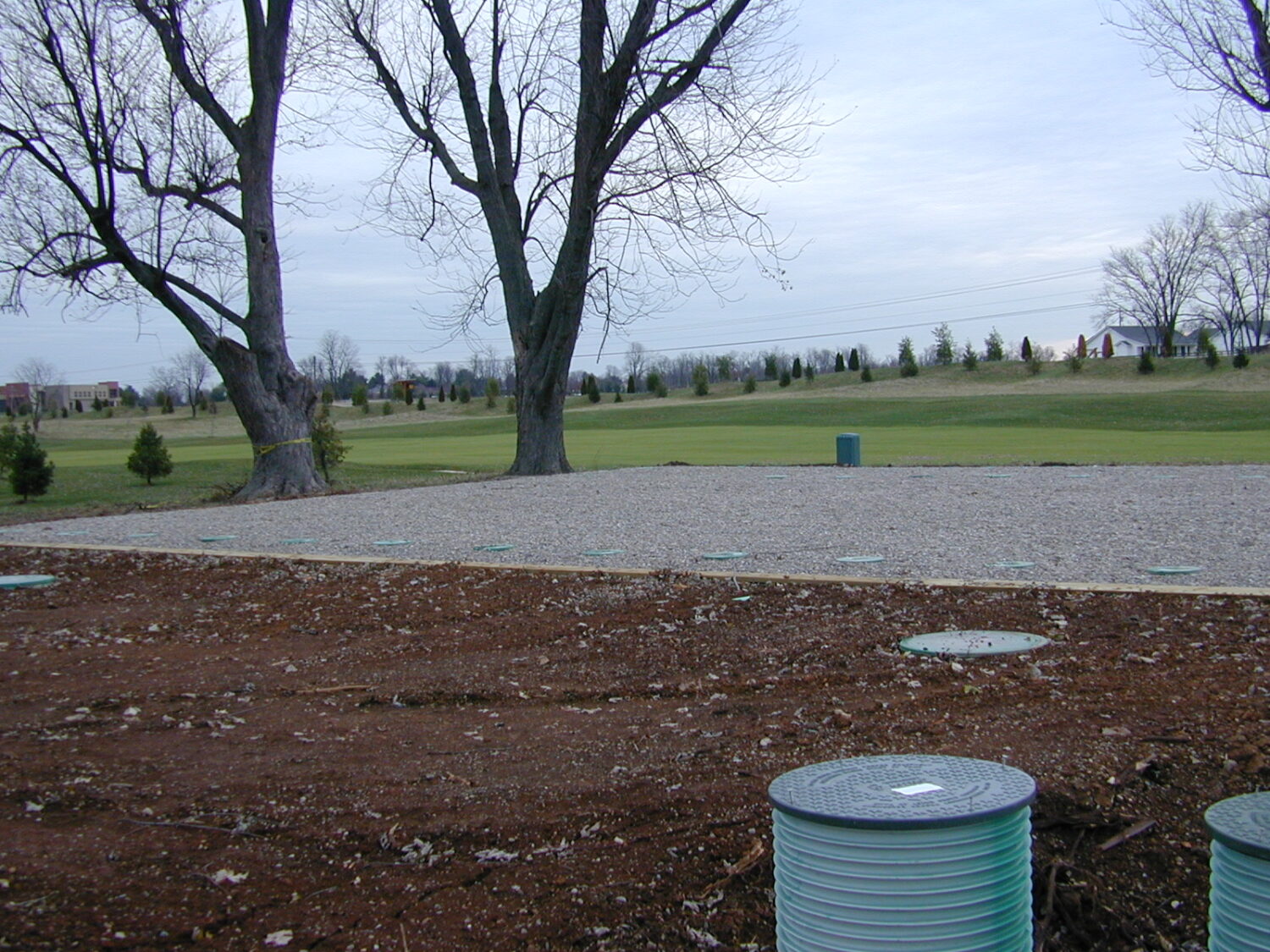
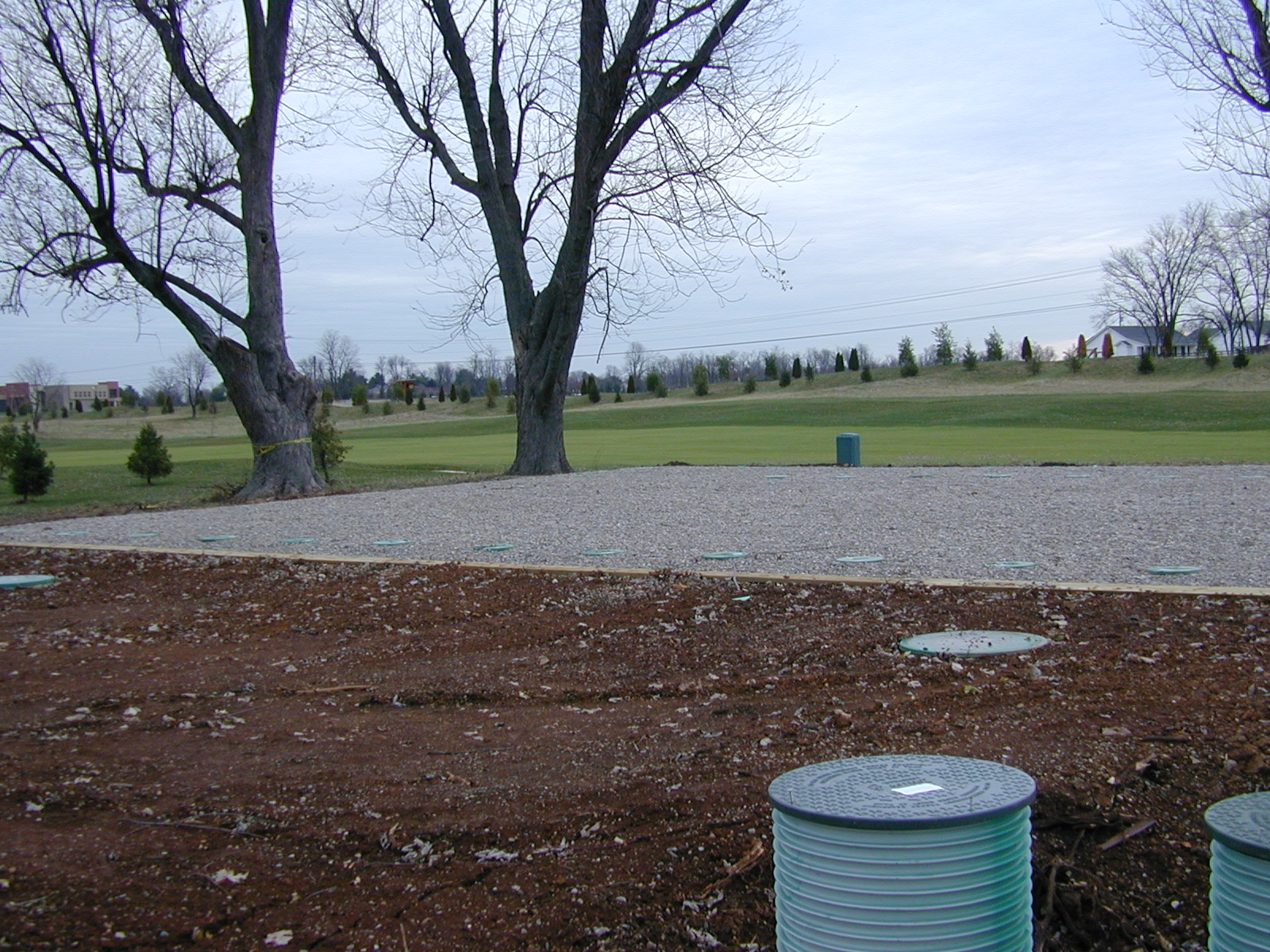
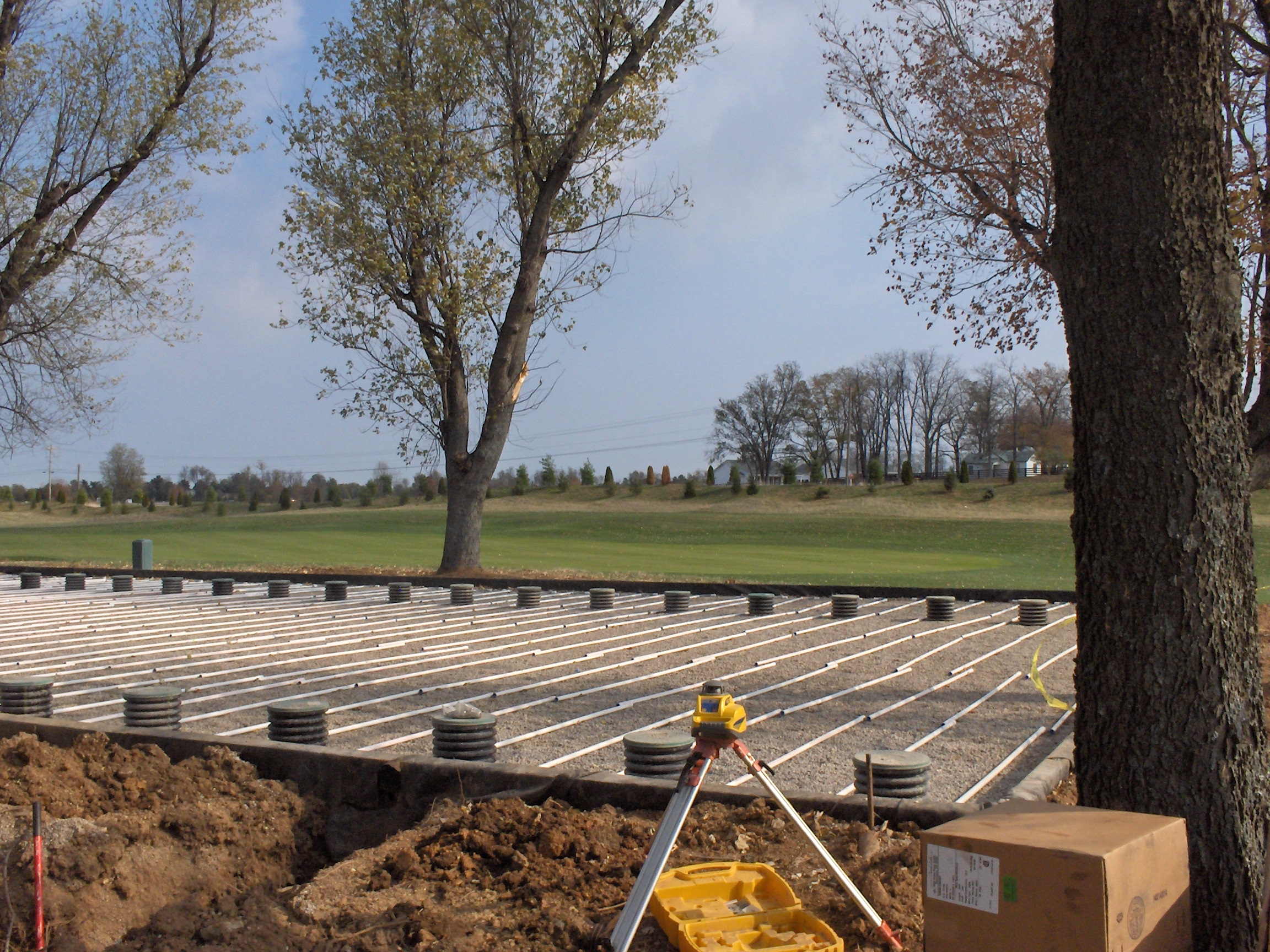
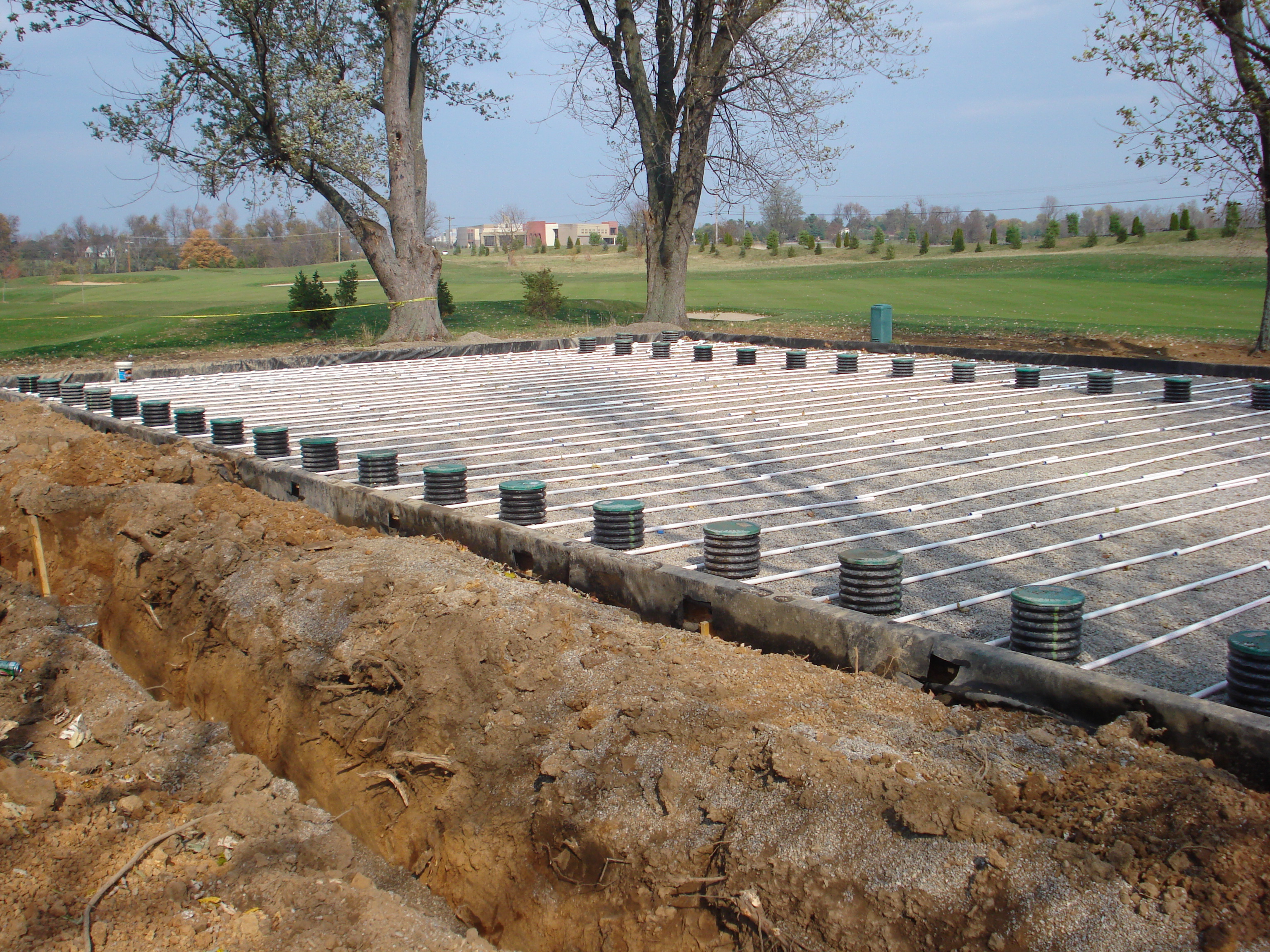
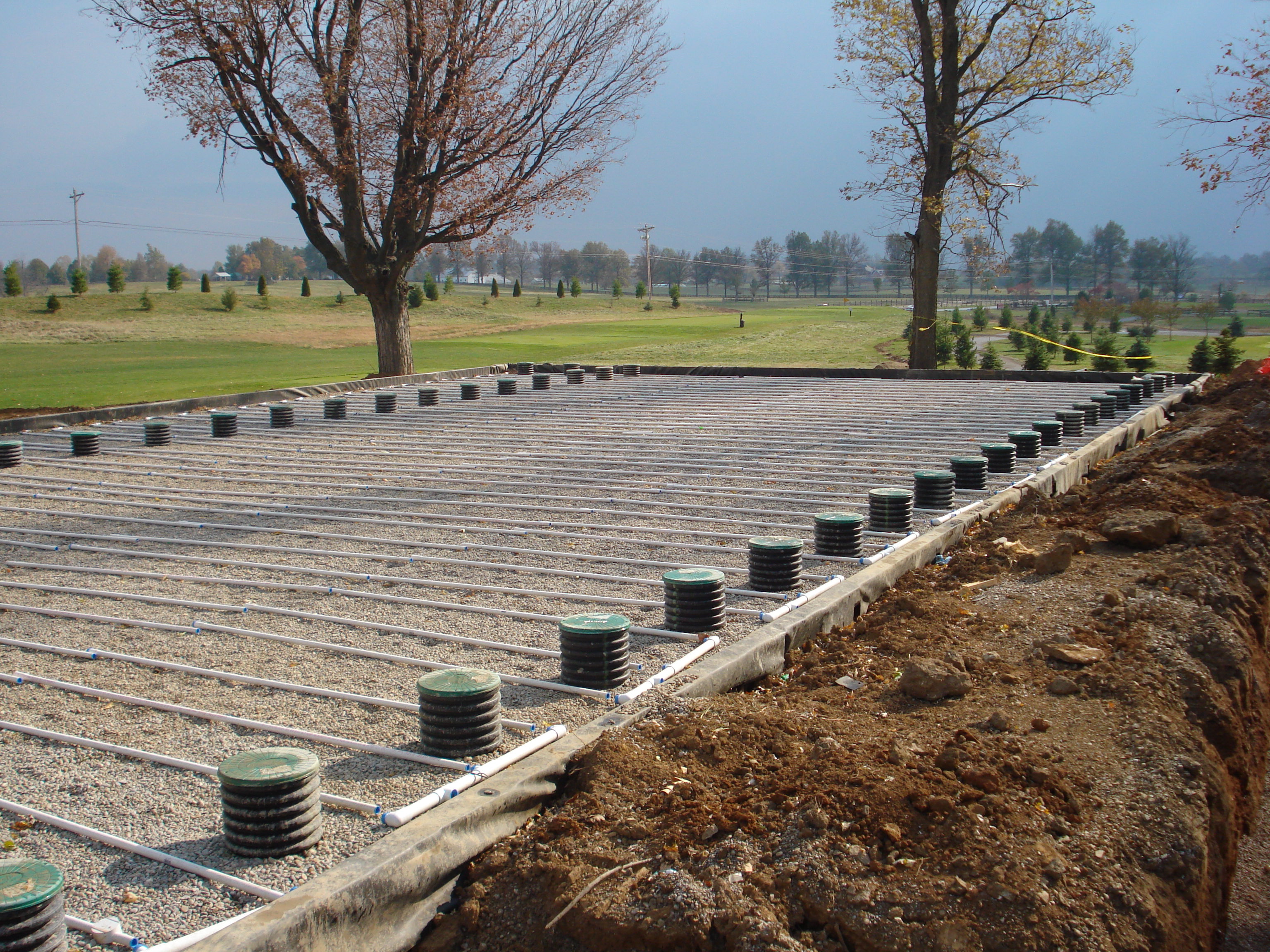
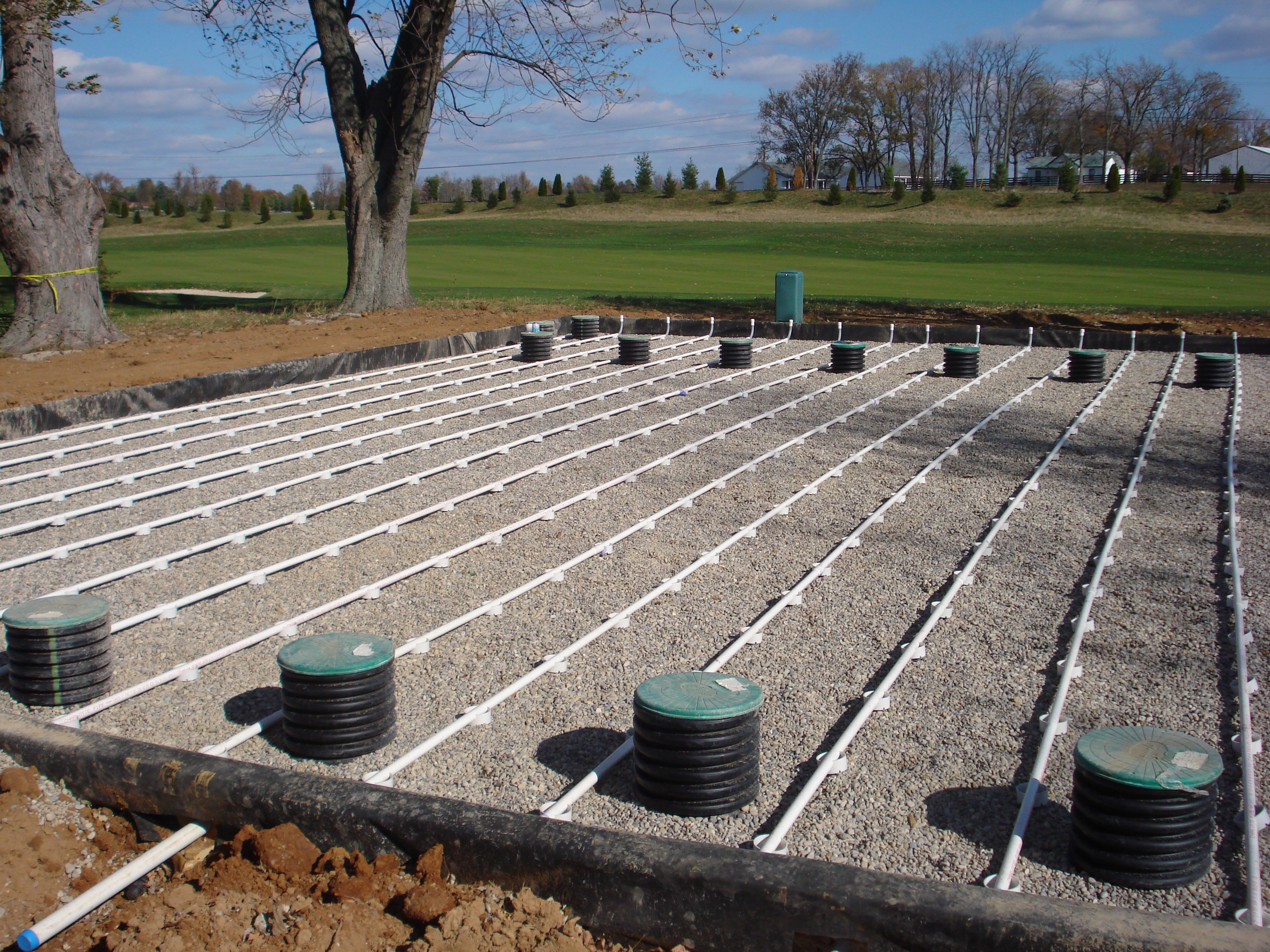
- A Recirculating Media Filter (RMF) for secondary treatment
- A drip irrigation system for final treatment and soil absorption
System Operation
- Wastewater undergoes primary treatment in septic tanks, then is filtered to 1/16 inch and pumped via turbine pumps into the collection system
- The RMF trickles effluent over 3/8 inch pea gravel, with 80% recirculated for further treatment and 20% directed to drip irrigation
- Final disposal occurs through soil absorption via drip irrigation
Result
- The system has operated successfully for 19 years with no odors or surfacing wastewater
- Homeowners report satisfaction, often unaware they’re not connected to conventional sewers
- Due to its success, a second identical system was installed in a nearby subdivision
- Ongoing maintenance by the local water company has ensured consistent performance
Long-Term Impact
This case challenges the perception that septic systems are short-term solutions. With:
- Proper soil evaluation
- Smart system design
- Quality installation
- Consistent maintenance
…a decentralized wastewater system can be a durable, environmentally sound solution that protects public health and supports community growth.

Got a story to share? We would love to feature it!
Color 1
Color 2
Color 3
Color 4
Color 5