Technical Brief
General Information – Sizing a Sewage Pump
General Information – Sizing a Sewage Pump.pdf
WHAT YOU NEED TO KNOW
- Voltage
- What is being pumped
- Vertical height of material being pumped
- horizontal distance of material being pumped
- Type, material and size of pipe
Sizing a Sewage Pump
There are three ways to size a sewage pump. Each method will provide an estimate of peak flow conditions.
1. Fixture unit calculation
This method uses the “Hunter Curves” for approximating water usage by a typical plumbing fixture. This is an acceptable way of estimating the pump flow requirement for residential and small commercial applications.
Larger Capacity System Chart
This is a derivation of the fixture unit method. It takes into consideration that in a high density environment, a ratio of plumbing fixture use can be applied to approximate peak flows. This method can be utilized for structures such as motels, apartment complexes, trailer parks, large office buildings, etc.
Population Method
A method of calculating demand used by civil engineers when designing municipal sewage systems. A gallon-per-day usage pattern is established for each type of building structure. Then, a peak factor is applied, which is spread over a 24-hour period. This method is used for homes and other residences where sewage f lows into a municipal sewage system. This method can only be used in those applications where a large basin is used.
Line Sizes
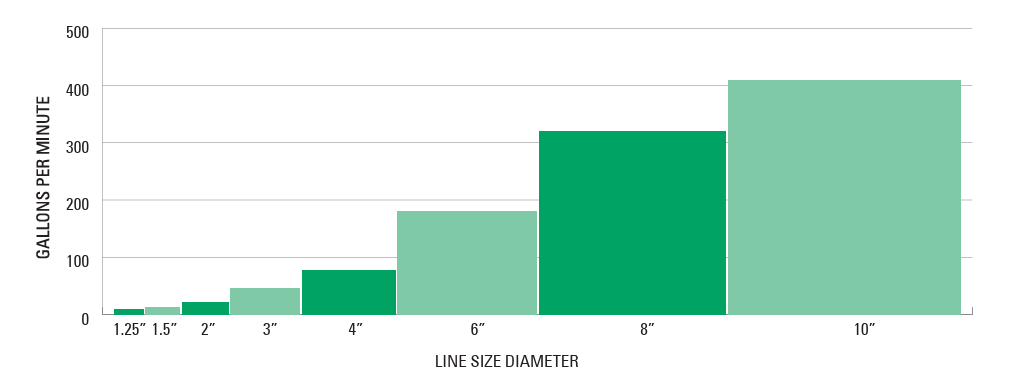
Regardless of what your peak flow requirement is for a given application, the pump must always be able to provide a minimum velocity of 2 feet per second through the line. Line sizes, with their accompanied minimum flow rates, are as follows:
Other Factors Concerning Pump Selection
1. The pump must be capable of pumping to the highest vertical point in the system
2. The Total Dynamic Head (TDH) in feet is the total resistance in the piping network which you are pumping against. Do not select a pump if the TDH is less than the minimum point shown on its curve.
3. Do not under-size the basin. If possible, always select a pump and basin assembly which allows for at least a 30-second pump cycle and no more than 6 starts per hour.
4. Always drill a vent hole in the discharge line between the pump and check valve. Air can interfere with the pump’s ability to work. In long horizontal runs of pipe, air relief valves may be required.
Have questions?
Contact us at https://zoellerpumps.com/contact-us/